


Best Business Cards for Ad Spend
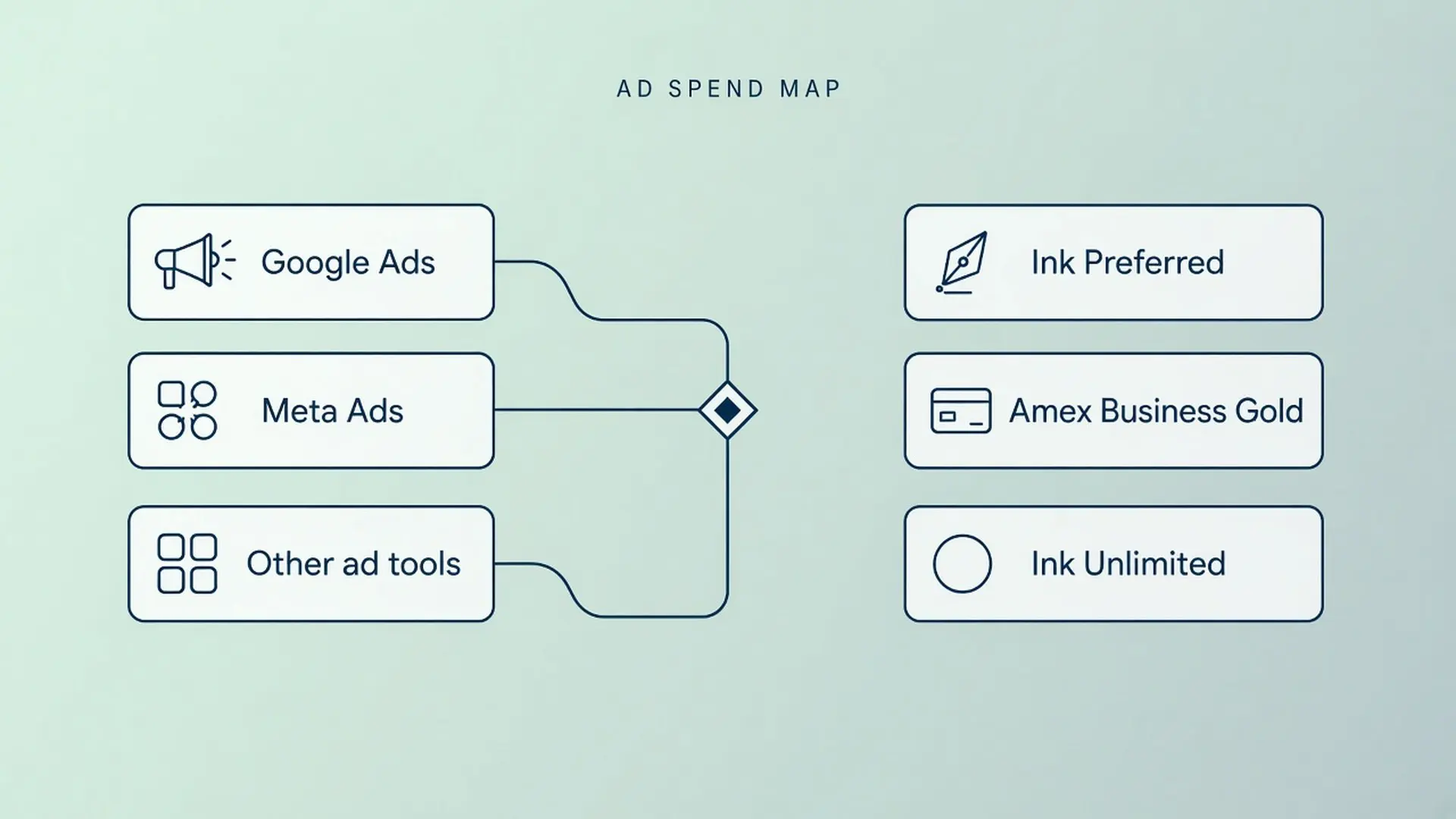
For operators who run Google Ads, Meta, and other paid traffic on a business card. Example pairings and category rules as of September 26, 2026.
Credit Waypoint is an independent publisher. Apply links on this page go to the issuer’s own site. We are not a bank, broker, or advisor. Not an offer of credit. Disclosure.
Rule of thumb. Put Google Ads and Meta on Ink Business Preferred while Chase still pays “advertising purchases made with social media sites and search engines.” Park leftover tools that code as generic services on Ink Business Unlimited. If that advertising bonus dies, check whether Amex Business Gold still pays advertising as one of your top two categories that month — otherwise use Unlimited. Confirm every charge on the statement. Issuer terms beat this page.
Best business cards for ad spend: the map
Example pairings for a common operator stack. Your coding may differ. Not a recommendation to apply. Rates and categories as of September 26, 2026.
| Vendor / bill | Example card | Why it is on the map | Confirm |
|---|---|---|---|
| Google Ads / Meta | Ink Business Preferred | Chase lists 3x Ultimate Rewards on the first $150,000 per account anniversary year in combined shipping, travel, internet/cable/phone, and advertising purchases made with social media sites and search engines. Google Ads and Meta usually sit in that advertising bucket when coding cooperates. | Statement + Chase terms |
| Leftover ad tools that may not code as advertising (some creative platforms, attribution tools, niche networks) | Ink Business Unlimited | $0 annual fee and unlimited 1.5% cash back on every purchase. When a tool posts as a generic business service, a flat no-fee rate usually beats forcing it onto a fee card’s bonus category. | Statement MCC / description |
| When the advertising bonus is dead | Amex Business Gold or Ink Business Unlimited | If Ink Preferred no longer pays social/search advertising, stop routing ads there for the 3x. Amex Business Gold can still pay 4x on U.S. media advertising (online, TV, radio) — but only if advertising is one of your top two eligible categories that billing cycle, up to $150,000 combined per calendar year. If ads are not in your top two that month, use Unlimited at 1.5% with no annual fee until we date a new table. | Amex category list |
These three cards are illustrations only. Holding them is not required. Applying is your call with the issuer.
How we picked
- We map the job (paid traffic bills), not a universal “best business card.”
- Issuer-stated advertising language comes first. Vendor brand names are not categories.
- Annual fee only earns its keep if advertising volume clears it after you confirm coding.
- Signup bonuses can change the short-term answer. They expire. Do not build a standing map on a dead offer.
- When coding is unreliable, a $0 annual-fee catch-all is the least-wrong park for leftover tools.
- Full rulebook: How we compare.
When this is wrong
This table is wrong if any of the following is true for you:
- The advertising category sunset. Issuers change multipliers. If your statement shows 1x on Google Ads after a category change, re-route until we publish a new as-of date.
- The vendor codes as something else. An ad platform can post as advertising, professional services, or a generic business MCC. Coding varies by merchant account and network.
- You are on a personal card. This page is about business products. Personal travel or cash-back cards are a different decision.
- The annual fee is not earned. Low monthly ad spend on Ink Preferred ($95) or Amex Business Gold ($375) can lose to Unlimited’s flat 1.5% with $0 fee. Run the math on your actual spend.
- You bill a vendor abroad on Unlimited. Unlimited carries a 3% foreign transaction fee. Prefer Preferred or Amex Business Gold (both list no foreign transaction fees) for those charges.
- Amex ads are not in your top two that month. Business Gold’s 4x is not a standing advertising bonus. It only applies when advertising is one of the two categories where you spent the most that billing cycle.
Fees and bonuses that change the math
Figures below were checked on the issuer product pages on September 26, 2026. Offers change. If this page and the issuer disagree, the issuer wins.
Ink Business Preferred
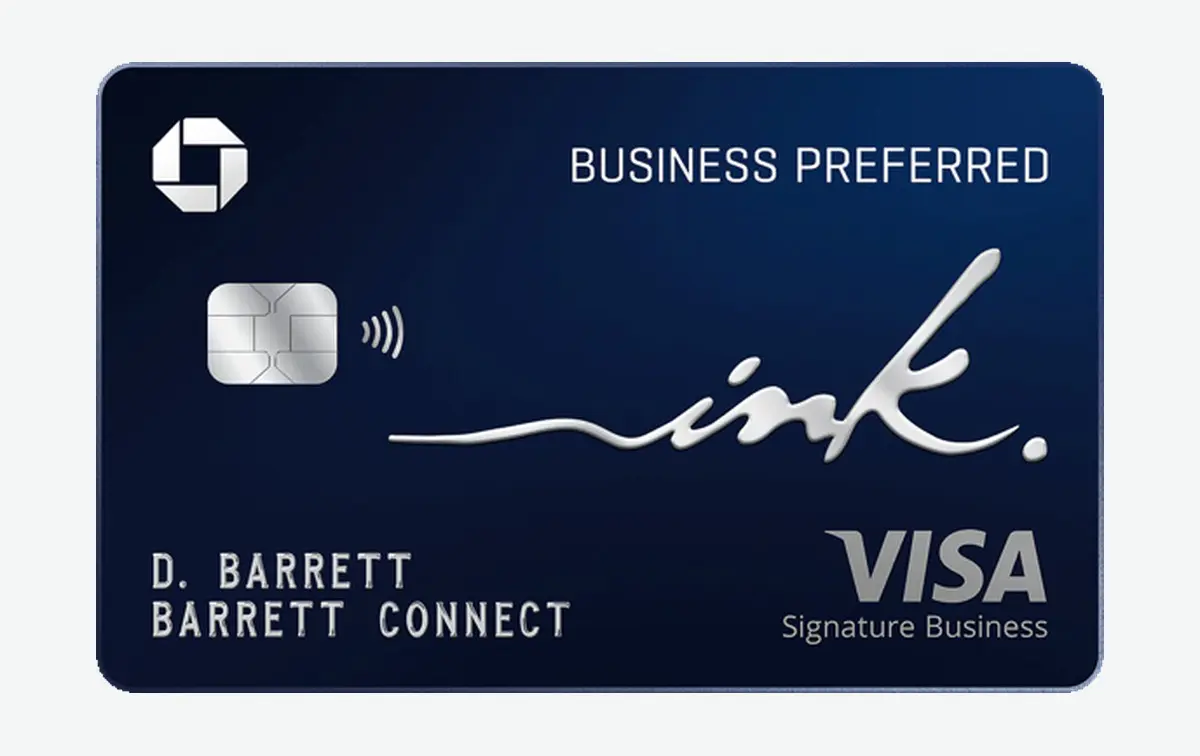
- Annual fee: $95
- Advertising (and other select categories): 3x Ultimate Rewards on the first $150,000 combined per account anniversary year on shipping; advertising purchases made with social media sites and search engines; internet, cable, and phone; travel. Then 1x.
- Signup bonus (current public offer): 100,000 bonus points after you spend $8,000 in the first 3 months. May not be available if you have ever held this card.
- Foreign transaction fee: None
Source: Chase Ink Business Preferred product page.
Apply at Chase Official issuer page. Terms are the issuer’s. Approval is not guaranteed. Disclosure.
Amex Business Gold
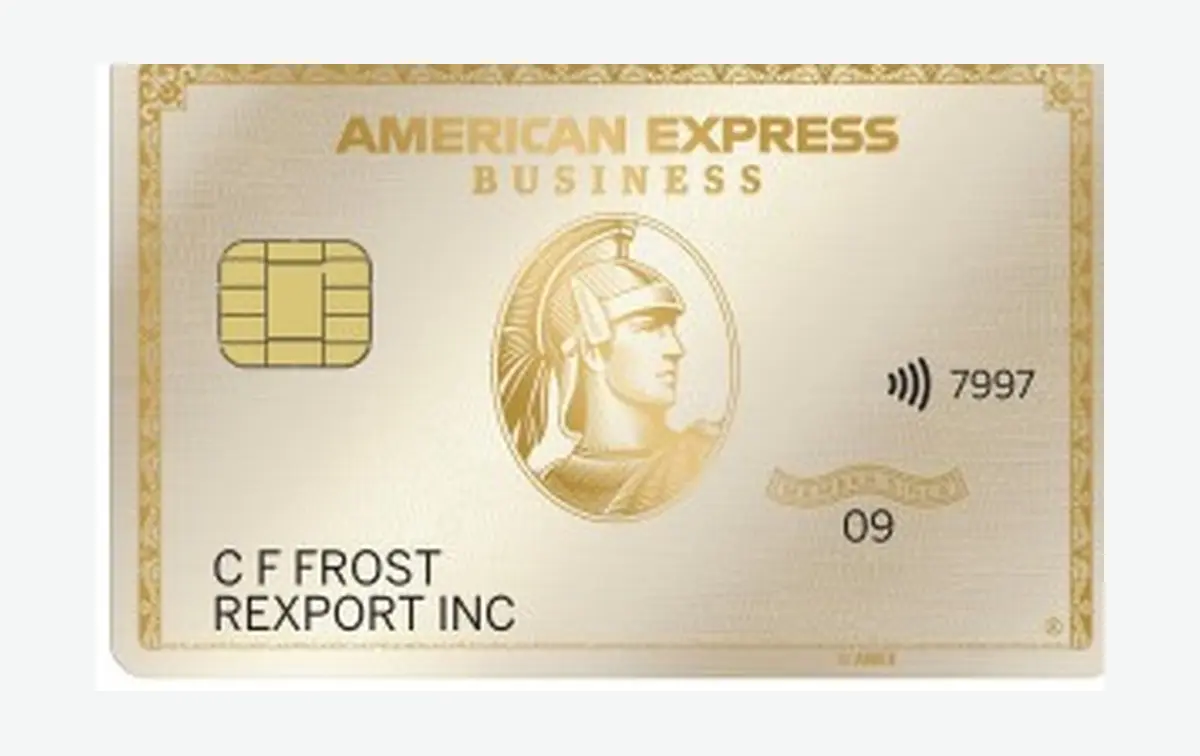
- Annual fee: $375 (Employee Business Gold Cards: $95 each; first five and each thereafter per Amex’s current fee schedule)
- Advertising: 4x Membership Rewards on purchases at U.S. media providers for advertising in select media (online, TV, radio) — only when advertising is one of your top two eligible categories that billing cycle. Cap: first $150,000 combined from those top-two categories each calendar year, then 1x.
- Signup bonus: Offers vary. Amex often personalizes the welcome offer at application. Check the live offer on Amex before you treat any blog figure as current.
- Foreign transaction fee: None (Amex does not charge a foreign transaction fee; merchants or ATMs may still add their own)
Source: American Express Business Gold product page.
Apply at American Express Official issuer page. Terms are the issuer’s. Approval is not guaranteed. Disclosure.
Ink Business Unlimited
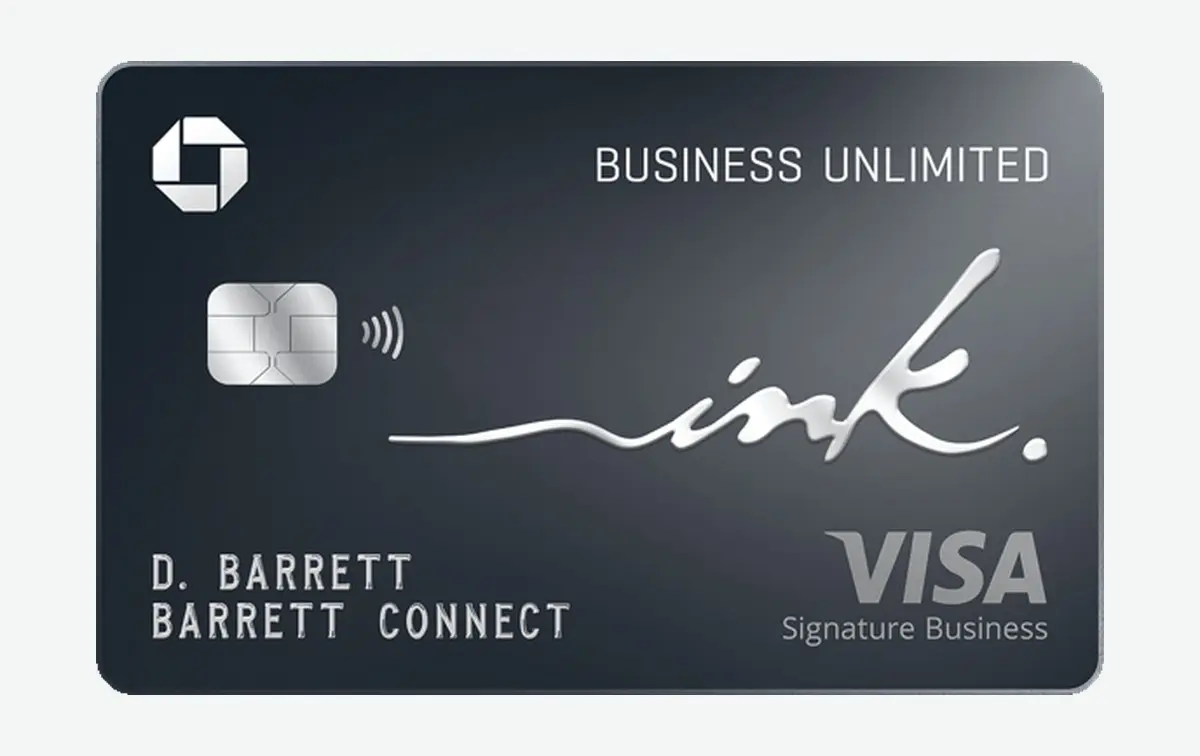
- Annual fee: $0
- Earn rate: unlimited 1.5% cash back on every purchase
- Signup bonus (current public offer): $750 cash back after you spend $6,000 in the first 3 months. May not be available if you have ever held this card or any other Chase for Business card without an annual fee.
- Foreign transaction fee: 3% of each transaction in U.S. dollars (per Chase’s business card comparison / pricing)
Sources: Chase Ink Business Unlimited product page; Chase business card compare (foreign transaction fee).
Apply at Chase Official issuer page. Terms are the issuer’s. Approval is not guaranteed. Disclosure.
How to confirm coding
- Run a small charge (or wait for a normal billing cycle) on Google Ads or Meta.
- Open the posted transaction. Note the merchant name and, if shown, the category or MCC.
- Compare that line to Chase’s “advertising purchases made with social media sites and search engines” language (or Amex’s U.S. media advertising category, if that is your card).
- If it coded wrong, move the next cycle to Unlimited. Do not keep paying a fee card for 1x advertising hope.
- Optional: ask issuer chat whether that merchant description usually qualifies. Chat is not a contract; the statement is.
For a wider picture of which bill goes where across your stack, see the card map.
Questions
Does Google Ads always code as advertising on Chase Ink?
No. Chase’s category covers advertising purchases made with social media sites and search engines, and Google Ads often lands there — but coding is not a promise. Confirm on your statement each cycle.
What if Meta and Google code differently from each other?
Split them. Put the one that earns the advertising bonus on Preferred. Park the other on Unlimited until coding changes.
Should I keep Ink Preferred just for ads if my spend is small?
Only if the 3x after the $95 fee still beats Unlimited’s 1.5% on your real monthly ad spend. We do not tell you to carry a balance to “make the fee worth it.”
Where do leftover creative and attribution tools go?
On Ink Business Unlimited until you see a statement that clearly pays an advertising bonus for that merchant.
Last updated: September 26, 2026
Byline: Credit Waypoint (Organization). Corrections: hello@creditwaypoint.com. Methodology: How we compare.